
As a child, we lived close by both sets of grandparents and got to know each. Most every Sunday afternoon we went to visit my mother’s parents and we got to visit with Aunts, Uncles, and cousins too. I got to see my father’s mother about every day since she lived above the Drug Store where my father worked. So for me, having close ties with grandparents (in-laws) was important. From what I could tell my parents got along well with both sets of parents. 
When my husband and I first met in college, I was only looking for someone fun to do things with, I was not interested in finding my spouse. Of course, the Lord had other plans and here we are 34 years and 5 children later. In that time I have had the opportunity to get to know my in-laws pretty well. Funny thing though, when we were becoming more serious in our dating, my parents, who were not members of the Church, encouraged the relationship and offered to mail me my grandmother’s rings to use for my engagement and wedding ring. His parents, members of the Church, were not too excited about the idea of our getting married before he graduated from college. They were afraid that he would not finish. He more than finished college, after 15 years of marriage and 5 children my husband graduated with an Ed.D. [Doctor of Education] in Institutional Management. By then my father-in-law and both my parents had passed away and did not get the chance to celebrate at the party we had for him.
According to James M. Harper and Susanne Frost Olsen, “Parents who can work toward inclusion of a new son- or daughter-in-law and who show increased love and support have the best relationships with their married children and more influence in the lives of their grandchildren” (p.330). Early on we lived in Provo, Utah. My parents lived in Pennsylvania and his parents lived in Southern California. So we spent more time with my in-laws than we did with my parents. Of course, we kept in touch via phone and mail with my parents until we had been married for at least 4 years. By that time we both had better-paying jobs and could afford to travel on occasion. We did visit with my in-laws at least once-a-month after we moved out to our own apartment in Southern California. After children came along we tried to visit more than once-a-month so our children would at least know one set of grandparents well. It was hard to go visit them because they did not have a high chair or a playpen for our children so we would pack everything up and transport it to their house for a visit of a few hours. One time, I insisted that they come to us. After all, they only had to drive themselves to our apartment and not bring all the equipment with them. My father-in-law said that it was too far, I said that it was the same distance for us to travel to them. I think he was joking, at least I hope he was.

My mother-in-law is the best, she has been very supportive of our family. She has followed the five suggestions that every in-law should avoid as given by Gloria Horsley. “They are giving advice, criticizing, pinning down children-in-law as to the specific reasons they are missing a family event, criticizing or taking over the disciplining of grandchildren, trying to control everyone and everything including children’s beliefs, and unclear and indirect communication” (p. 332). We have gone camping with her and to Hawaii together. She has babysat for us and hosted family dinners at her home. Now that she is older and her health has begun to fail, we have had the opportunity to care for her full time. But only with time, contact, and communication are those relationships built.
Harper, J. M. & Olsen, S. F. (2005). “Creating Healthy Ties With In-Laws and Extended Families.” In C. H. Hart, L.D. Newell, E. Walton, & D.C. Dollahite (Eds.), Helping and healing our families: Principles and practices inspired by “The Family: A Proclamation to the World” (pp. 327-334). Salt Lake City, UT: Deseret Book Company.
Horsley, G. C. (1997). The In-law Survival Manual: A Guide to Cultivating Healthy In-law Relationships (New York: John Wiley & Sons).






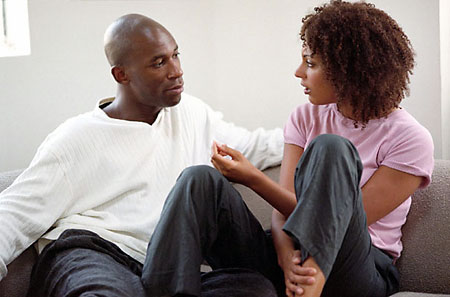
 The marital poop detector is not anything stinky or too difficult to handle it is merely a weekly interview or inventory of how things are going with both husband and wife. “Usually one member of a couple tends to take the lead in sniffing out trouble. More often than not it is the wife. When her husband gets cranky or withdrawn, she calls him on it and finds out what’s wrong. But there’s no reason why you both can’t perform this function in your marriage” (p. 280-281). For instance, when my husband may seem off or distracted, I will take him aside and ask what is going on. By asking simple questions to take stock of your relationship each week or more often if necessary, major blow-ups can be avoided.
 statement, but he was right. I came to be grateful for those small things that seemed irritating at first because of the reminder that we were alive and kicking.
 By using these steps focus on the problem can be maintained and anger can be avoided. In Ephesians 4:26 “Paul asks the question, ‘Can ye be angry, and not sin?’” In 3 Nephi we read, “Behold, this is not my doctrine, to stir up the hearts of men, with anger, one against another, but this is my doctrine, that such things should be done away.



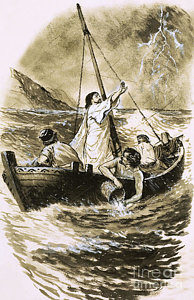 He suggests that we recognize who is the author of such negative feelings and turn our thoughts more toward the feelings of our partners. Thereby helping us become more Christ-like in our interactions with others. As an added result we draw closer to our spouses. “The surge of indignation that swells up when we are upset does not have to swamp our little boat. We can choose to calm the seas by the same power that Jesus used to calm the waters of Gennesaret” (p.26, italics added).