

Dating After Marriage? Late Pass

I know this may not sound like it applies to marriage relationships, but please hear me out. As I come to the close of early morning seminary and the New Testament I have begun to look forward to studying the Book of Mormon next school year. I have found that every time I read the Book of Mormon I learn something new or gain new insights. I remember one time reading and chapter in 2nd Nephi and asking myself if that was a new chapter because I did not remember reading it before. This experience is not because the Book of Mormon has changed but rather because I have changed. As time passes we are new and different people because of effects of life experiences. Therefore, if I am different each day the same would hold true for my spouse and my children.

That is why this week’s lesson material has hit home for me. We were challenged to go on a date with our spouse every week for the next few weeks and to nurture our relationship with our spouse by changing our attitudes towards them.  When we were dating we spent time getting to know each other. We talked about everything, as time has gone by and five children later, we almost take for granted that we know all there is to know about each other. But do we really? For years, our dates have been few and far between. We go to the Temple on a fairly regular basis but then go straight home and back to work. We go out for dinner on our anniversary. We pretty much do what we need to do, such as homework for me and he grades papers for his online teaching job and works on his calling and non-profit organization. With this week’s assignment to go on a date, I honestly do not know when we will be able to achieve that. I have rehearsal for the local high school musical every night this week, which interestingly, I learned about last weekend. Just about the same time that I learned that we need to go on a date this week.

However, all is not lost. I have made a conscientious effort to look at my husband and think about him in a more positive light. By doing so, I realize just how hard my husband works to support our family and help around the house. I find that I am the one who is changing and changing for the better. My husband seems to be happier too.

I can’t help but think of the Savior’s commandment to “Love one another”. This especially applies to our spouses and families. Will we really be able to be together forever as a family if we don’t truly love one another? I’ll be the first to admit that there have been days when I have been upset with my husband and ask myself, “Do I really want to be with him forever”? My answer is a resounding, “Yes”! Yes, I do want to be with my husband and family forever and continue learning and growing together. We just need to get our schedules to in sync to go on that date.

It Begins with Friendship

Who knew that friendship was really the basis for a happy marriage? I always thought that shared interests, good communication, and being physically attracted to each other were the foundations of a happy marriage. Funny thing is that if a couple has a good friendship they probably do have shared interests, good communication and are physically attracted to each other.

I know a couple who are probably the best of friends and were high school sweethearts and married shortly after high school. They have five grown children with eight grandchildren with two on the way. They could spend every moment together and never be bored with each other. They do so many things together such as scuba diving, mountain climbing, and competing in marathons and half marathons. They are active in Church and support each other in fulfilling their callings. As they have grown older they look more and more like each other. They are fun to be around and always have positive things to say about each other and those around them.

I’m sure they have had their fair share of disagreements, but that has not deterred them from being each other’s best friends. Dr. John M. Gottman states in his book, “the Seven Principles for Making Marriage Work”, “At the heart of the Seven Principles approach is the simple truth that happy marriages are based on a deep friendship” (p.21). How do we do this when statistics seem to be against the success of a marriage?

At some point, everyone will encounter differences, miscommunications, frustrations, and arguments with others in their life. Whether it is a spouse, a child, a parent, or a co-worker. According to Dr. Gottman, there are six signs that indicate if a marriage is in danger of ending. Those signs are “first: a harsh start-up, second: the four horsemen, third: flooding, fourth: body language, fifth: failed repair attempts, sixth: bad memories” (p.31, 32, 39, 41, 44, & 47). Each symptom is negative in nature thus prohibiting or slowly destroying the marriage.

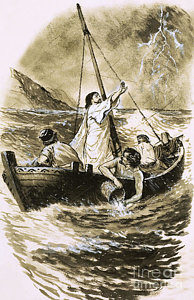
Because of my belief in Jesus Christ, I feel a great responsibility to work at my marriage and to help not only myself but also my spouse to reach our eternal potential. We can only do that together as husband and wife, married for time and eternity. Dr. H. Wallace Goddard in his book “Drawing Heaven into your Marriage” draws on the power of the Atonement of Jesus Christ to help change our mindsets when feeling frustrated, “indignant, or irritated” (p.25). He suggests that we recognize who is the author of such negative feelings and turn our thoughts more toward the feelings of our partners. Thereby helping us become more Christ-like in our interactions with others. As an added result we draw closer to our spouses. “The surge of indignation that swells up when we are upset does not have to swamp our little boat. We can choose to calm the seas by the same power that Jesus used to calm the waters of Gennesaret” (p.26, italics added).

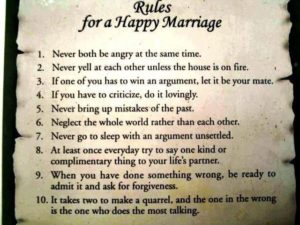
 

Goddard, H. Wallace, Ph.D. (2007). Drawing Heaven into Your Marriage: Powerful Principles with Eternal Results. Fairfax, VA: Meridian Publishing.

Gottman, John M., Ph.D. & Silver, Nan. (2015). the Seven Principles for Making Marriage Work: A Practical Guide from the Country’s Foremost Relationship Expert. New York, NY: Harmony Books.

Lesson 4 – Marriage

One of the reasons I am taking Marriage and Family 300 is that I want to make sure that my marriage does not become like many of the marriages that I have witnessed in my family and in my husband’s family. Meaning the couple seemed to be just living together under the same roof. I want more than that and I believe that Heavenly Father wants more than that from us as a couple and a family.

When my husband and I got married, I was the only member of the Church of Jesus Christ of Latter-Day Saints in my family. We chose to marry in the Los Angeles Temple, which meant that my parents could not be in attendance at the ceremony. This was a difficult decision and at the same time, was not a difficult decision for me. I knew that I wanted to be married for time and all eternity to my spouse. I even said before I joined the Church that I wanted a Temple marriage. I also knew that I wanted the Lord to be part of our marriage. Elder David A. Bednar of the Quorum of the Twelve Apostles said in 2006, “Ultimate happiness, which is the very object of the Father’s plan, is received through the making and honoring of eternal marriage covenants”.[i] This is what I want for my marriage.

Growing up I never knew my paternal grandfather because he died when my Dad was three-years-old. My maternal grandparents stayed together, but I do not believe I ever say any kind of affection displayed between them. The closest thing that might resemble affection was my grandfather’s nickname for my grandmother. He called her “Luke” because she was a nurse and Luke in the Bible was a physician. They slept in separate bedrooms at the summer cabin and had separate beds on opposite sides of the room at their main home. I think it was because grandpa snored so loud. I only saw one occasion where my father-in-law held my mother-in-law’s hand when we went to dinner to celebrate their anniversary. He always seemed to be the boss and in control, she was in subjection to him. My own parents gradually seemed to just reside together, they spoke with each other and did some things together, but my mother made the comment after my father passed away saying that she really did not miss him. I thought to myself, “how sad”, and yet I know that my mother had been a very independent woman even when my brother and I were children. She had to be because Dad worked very long hours at the Drugstore. In the talk, “Covenant Marriage” by Elder Bruce C. Hafen, he mentions three “wolves” that test a marriage, natural adversity, own imperfections, and excessive individualism. I feel that excessive individualism is the greatest threat to marriages today. This is what I am trying to prevent from happening in my own marriage. “The adversary has long cultivated this overemphasis on personal autonomy, and now he feverishly exploits it….He exaggerates the need for having space, getting out, and being left alone”.[ii] I have had to be independent as my husband completed his education, served in the Stake Presidency, and worked to provide for our family. But that was only temporary, now it is my turn to be in school, teach seminary, volunteer in the community, and teach piano lessons. Soon things will change and I will have the opportunity to put into practice what I am learning in this class. I will have the opportunity to be a transitional character in my family and work to improve the legacy of marriage relationships. My oldest child turns 30 this week and my youngest graduates from college. Yet none of my children are married yet. I wonder if they feel that our marriage has been so bad that they do not want to marry? I pray that is not the case and I pray that we can show them that you are never too old to learn and improve.

[i] Bednar, David A., “Marriage Is Essential to His Eternal Plan”, Ensign, Jun 2006, 82-87

[ii] Hafen, Bruce C., “Covenant Marriage”, General Conference, October 1996