The Marital Poop Detector?

The saying goes that you are never too old to learn something new. This has been the case this week for me, I learned about the “marital poop detector” in John M. Gottman’s book, the Seven Principles for Making Marriage Work.

I think most who have been married more than two years would agree that a marriage is a work in progress. It is a living, breathing entity that requires attention and sustenance to keep it alive and growing. The problem is that as time goes by couples may fall into the rut of routine and go through the motions of marriage without really putting anything into it. Kind of like what I do with my car and oil changes, I add oil to keep the motor running when I really should get the oil changed. If I don’t change the oil or add oil to the engine, I wind up in trouble with an expensive repair bill. The marital poop detector, according to Gottman can help prevent a minor problem, such as getting an oil change, from blowing up into something greater, like the expensive repair bill.

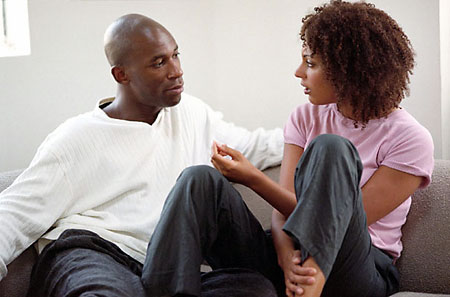
            The marital poop detector is not anything stinky or too difficult to handle it is merely a weekly interview or inventory of how things are going with both husband and wife. “Usually one member of a couple tends to take the lead in sniffing out trouble. More often than not it is the wife. When her husband gets cranky or withdrawn, she calls him on it and finds out what’s wrong. But there’s no reason why you both can’t perform this function in your marriage” (p. 280-281). For instance, when my husband may seem off or distracted, I will take him aside and ask what is going on. By asking simple questions to take stock of your relationship each week or more often if necessary, major blow-ups can be avoided.

Gottman provides a questionnaire to assess the marriage relationship. I am only going to provide 10.

  1. I have been feeling emotionally distant.
  2. I have been feeling lonely.
  3. I have been angry.
  4. I wish we were closer right now.
  5. My partner has been acting irritably.
  6. My partner’s attention seems to be somewhere else.
  7. I have little idea of what my partner is thinking.
  8. We really need to talk.
  9. Lately small issues escalate.
  10. There hasn’t been very much fun or joy in our lives (p. 281-282).

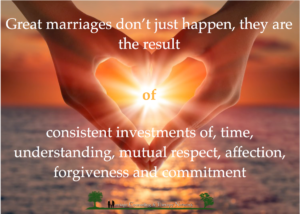
Keeping a marriage alive requires an investment of time, energy, and a willingness to work together. After all, isn’t that why you got married in the first place, to work together instead of apart? By understanding what each other needs, a couple can work together to meet those needs and create a stronger marriage.


Gottman, John M., PH.D., and Silver, Nan, The Seven Principles for Making Marriage Work: A Practical Guide from the Country’s Foremost Relationship Expert. Harmony Books, New York, 2015, p. 280-282


Anger or Peace? Your Choice

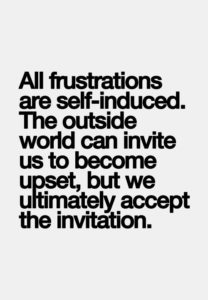
Marriage is like a two-sided coin while being the most rewarding experience it can also be one of the most frustrating. Rewarding because of the joy found in each other’s company and frustrating because as we live together we get to see the “real” person that we are married to, idiosyncrasies and all.

I remember when I was first married someone said that you really do not know someone until you live with them. I discovered that statement to be true. My spouse and I had different levels of cleanliness, I thought we needed to own a vacuum cleaner to clean the carpet and he knew how to use a broom to get the job done. I used to be bothered by the fact that my husband would cut the wind first thing in the morning. I mentioned that to my brother one day and he said, “At least you know that he is alive and kicking”. I laughed at his statement, but he was right. I came to be grateful for those small things that seemed irritating at first because of the reminder that we were alive and kicking.
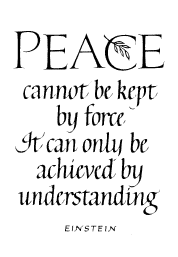
With that said, there have been times when life was not a bed of roses. Even roses have thorns and anger may be the response given or received then. But where does that anger come from and who is the author of such feelings? According to Elder Lynn G. Robbins of the Quorum of Seventy, One of Satan’s “strateg[ies] is to stir up anger between family members.” The family is where we practice for eternity and Satan does not want men to find happiness in this life or in the next so he attacks the family any way he can. Anger is just one of his tools.

Interestingly, Elder Robbins points out that, “A cunning part of his strategy is to dissociate anger from agency, making us believe that we are victims of an emotion that we cannot control”.  But that is not the case, we cannot lose our temper because it is not an involuntary emotion. Rather, “becoming angry is a conscious choice, a decision; therefore, we can make the choice not to become angry. We choose!” says Elder Robbins. Continuing, Elder Robbins quotes, “Author William Wilbanks states ‘Aggression,…suppressing anger, talking about it, screaming and yelling,’ are all learned strategies in dealing with anger. ‘We choose the one that has proved effective for us in the past. Ever notice how seldom we lose control when frustrated with our boss, but how often we do when annoyed by friends and family?’” It all comes down to how we will choose to act and not react. As part of his book the Seven Principles for Making Marriage Work, John M. Gottman shares five points, if applied to a marriage, will help with not avoiding confrontation but help with acting and resolving problems without anger or lessening it. The five points are

  1. Soften your start-up
  2. Learn to make and receive repair attempts
  3. Soothe yourself and each other
  4. Compromise, and
  5. Process any grievances so that they don’t linger.

 By using these steps focus on the problem can be maintained and anger can be avoided. In Ephesians 4:26 “Paul asks the question, ‘Can ye be angry, and not sin?’” In 3 Nephi we read, “Behold, this is not my doctrine, to stir up the hearts of men, with anger, one against another, but this is my doctrine, that such things should be done away.

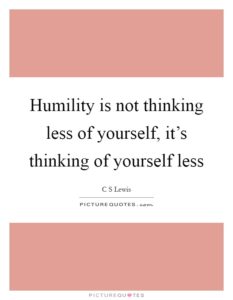

Ultimately, then the choice is who are we going to follow, Jesus Christ or worldly leaders? Will we allow anger a place in our hearts and interactions with others or will we follow the counsel found in Doctrine and Covenants 121? “No power or influence can or ought to be maintained…, only by persuasion, by long-suffering, by gentleness and meekness, and by love unfeigned”.  As a result, Satan has less control over us and our families because there is greater love shared by all.

References:

Gottman, John M., PH.D., and Silver, Nan, The Seven Principles for Making Marriage Work: A Practical Guide from the Country’s Foremost Relationship Expert. Harmony Books, New York, 2015, p.161.

Robbins, Elder Lynn G., “Agency and Anger,” Ensign, May 1998, 80.


Pride Goeth Before the Fall

I have been guilty of being prideful, it took me years to realize just how much of an idiot I had been. Funny thing is that I did not realize that it was pride that was holding me back,  until this week’s lesson. I just knew that I needed to let it go and ask forgiveness from my husband. President Ezra Taft Benson, the thirteen President of the Church of Jesus Christ of Latter-Day Saints said in his address of April 1989, “In the scriptures there is no such thing as righteous pride…” (p. 4). He continues, “They [the proud] withhold forgiveness to keep another in their debt and to justify their injured feelings” (p. 6). This is a pretty accurate description of what I had done. Only thing is that my husband did not realize what was going on because I never said anything until I asked for his forgiveness.


I had carried the grudge for so long that I had even let it go to the back of my mind. So grateful that the Holy Ghost will bring all things to our remembrance (John 14:26). That is what happened to me and motivated me to address the issue and speak with my eternal companion and overcome it and move forward together. President Benson said, “Most of us think of pride as self-centeredness, conceit, boastfulness, arrogance, or haughtiness. All of these are elements of the sin, but the heart, or core, is still missing. The central feature of pride is enmity – enmity toward God and enmity toward our fellowmen” (p. 4-5). “Enmity means ‘hatred toward, hostility to, or a state of opposition’” (p. 5).  We may not think of our family members as our fellowmen, but they are, and sometimes they are the ones we treat the worst.


Fortunately, we have the opportunity for repentance and change. We can overcome pride and become more humble, more loving and giving, and more Christ-like in our interactions with others. We have a choice, President Benson reminds us, “God will have a humble people. Either we can choose to be humble or we can be compelled to be humble” (p. 7). Knowing that pride is what led to the destruction of Sodom and Gomorrah, as well as the Nephite Nation, I think I will choose to be humble.


References: Benson, Ezra Taft. (May 1989). Beware of Pride. Ensign, 4-7.

Turning Toward Each Other

In the Beginning

When my husband and I were first married we lived in Provo, UT because he had a year of schooling left. But I am so thankful for that time because we learned to rely on each other and on the Lord. After graduation, we moved to Southern California and lived with his parents for 3 months too long. I used to get so frustrated when my husband got home from work he would report to his father before he would even say “hello” to me. I did not like that experience and was grateful when we moved out to our own apartment.

Currently

This experience reminds me of our lesson this week in learning to turn toward each other. I think I have been doing this for many years but just did not have a name for it. I’d invite my husband or a child to go with me to the store on a regular basis, I did not know why I did it, I just liked the company. Sometimes my husband has been able to go with me and other times he could not. I always enjoy the chance to go pick up a gallon of milk and some bread and having the chance to talk. I have gotten in the habit of pausing the show on TV when he walks in the room because he wants to tell me something. (Don’t you just love DVR?) Doing little things like this add to the feelings of trust and intimacy to a marriage and help it grow stronger.

What Can We Do About It

I like the analogy of making deposits in an emotional bank account when we respond to the bids for attention from our spouse. “Keeping an account in your head of how much your partner has been connecting with you in little ways can greatly benefit your marriage” (p.94)1. Dr. Gottman shares a list of activities that couples can do together to help them turn toward each other. A few of those activities are:

  • Clean house, do laundry.
  • Watch or read the news together.
  • Perform committee work in the community (e.g., volunteering).
  • Exercise together.
  • Walk the dog together.
  • Go on weekend outings (e.g., picnics, drives)2 (p.95-96).

Most of the activities listed cost little to no money so anyone can complete them. Most everyone I know wants a happy marriage and many do have happy marriages. But just as we need to invest our money in order for it to grow, the same holds true for our marriages. We need to invest not only time but ourselves in our marriages so they can grow and we can grow together.


References:

1. Gottman, John M., Ph.D. & Silver, Nan. the Seven Principles for Making Marriage Work: A Practical Guide from the Country’s Foremost Relationship Expert. (2015). New York, NY: Harmony Books.

2. Ibid.