
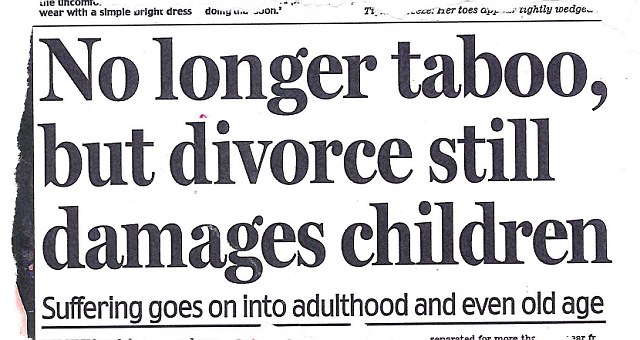
Interestingly, I have signed up for a marriage class and what is the first thing we discuss? Divorce. I feel that divorce is the antithesis of marriage, being that divorce is the opposite of marriage. But, I could be wrong, perhaps not getting married in the first place is the antithesis of marriage, such as cohabitation? Growing up in my small town in Northeastern Pennsylvania, divorce was not something I considered until I had two friends whose parents divorced. Today, divorce almost seems the norm instead of the exception. At one point in time, obtaining a divorce was a difficult thing to do, only with cases of infidelity was a divorce granted. Nowadays there are no-fault divorce laws and a marriage can be dissolved in about a year. The same amount of time that it takes most folks take to plan a wedding.
Statistics of Divorce
According to The State of Our Unions of 2012, published by the National Marriage Project “For the average couple marrying for the first time in recent years, the lifetime probability of divorce or separation now falls between 40 and 50 percent.”[i] Numbers like that can be very discouraging, not to mention that the divorce rate is higher for remarriages. But who is involved in a divorce? Certainly, the couple that married, but they are not the only ones affected by divorce. If children have been born to their union, they most assuredly are affected as well as the parents, siblings, and other close friends and relatives. As the saying goes, “nothing in life is free”. The same holds true with divorce, there is a cost.
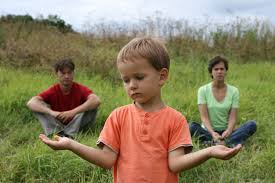
Sometimes that cost cannot be held in the hand and counted. It is a price that is paid by the heart. For instance, when one of my hometown friend’s parents divorced, he pretty much shut down when that happened. He needed to repeat a grade, lost interest in many activities, and never really seemed to recover until after high school. Paul R. Amato suggests from his study that children of divorced parents “experience a wide range of cognitive, emotional, and social problems, not only during childhood, but also in adulthood.”[ii] Is this a cost we are willing to bear? Perhaps the solution could be as easy as some education?
Conclusion
In The State of Our Unions is a suggestion for “Marriage and Relationship Education.”[iii] The idea behind it is to help couples learn better relationship skills. I personally like what Elder Dallin H. Oaks of the Quorum of the Twelve Apostles of the Church of Jesus Christ has to say about avoiding divorce. “The best way to avoid divorce from an unfaithful, abusive, or unsupportive spouse is to avoid marriage to such a person. If you wish to marry well, inquire well.”[iv] Having been married for 34 years to a wonderful, not perfect man, we have had our share of ups and downs. But I did not get married to get divorced, I promised to stay through thick and thin. Maybe we need to be better at keeping our promises?
[i] https://byui.brightspace.com/content/enforced/248791-Online.2017.Spring.FAML300.01/Course%20Files/State%20of%20Our%20Unions-2012.pdf?_&d2lSessionVal=pKj5KFnx8ngPNyDgRjN2nYILv&ou=248791
[ii] file:///C:/Users/Marie/Downloads/Amato-%20FAML%20300%20Lesson%202.pdf
[iii] https://byui.brightspace.com/content/enforced/248791-Online.2017.Spring.FAML300.01/Course%20Files/State%20of%20Our%20Unions-2012.pdf?_&d2lSessionVal=pKj5KFnx8ngPNyDgRjN2nYILv&ou=248791
[iv] https://www.lds.org/ensign/2007/05/divorce?lang=eng